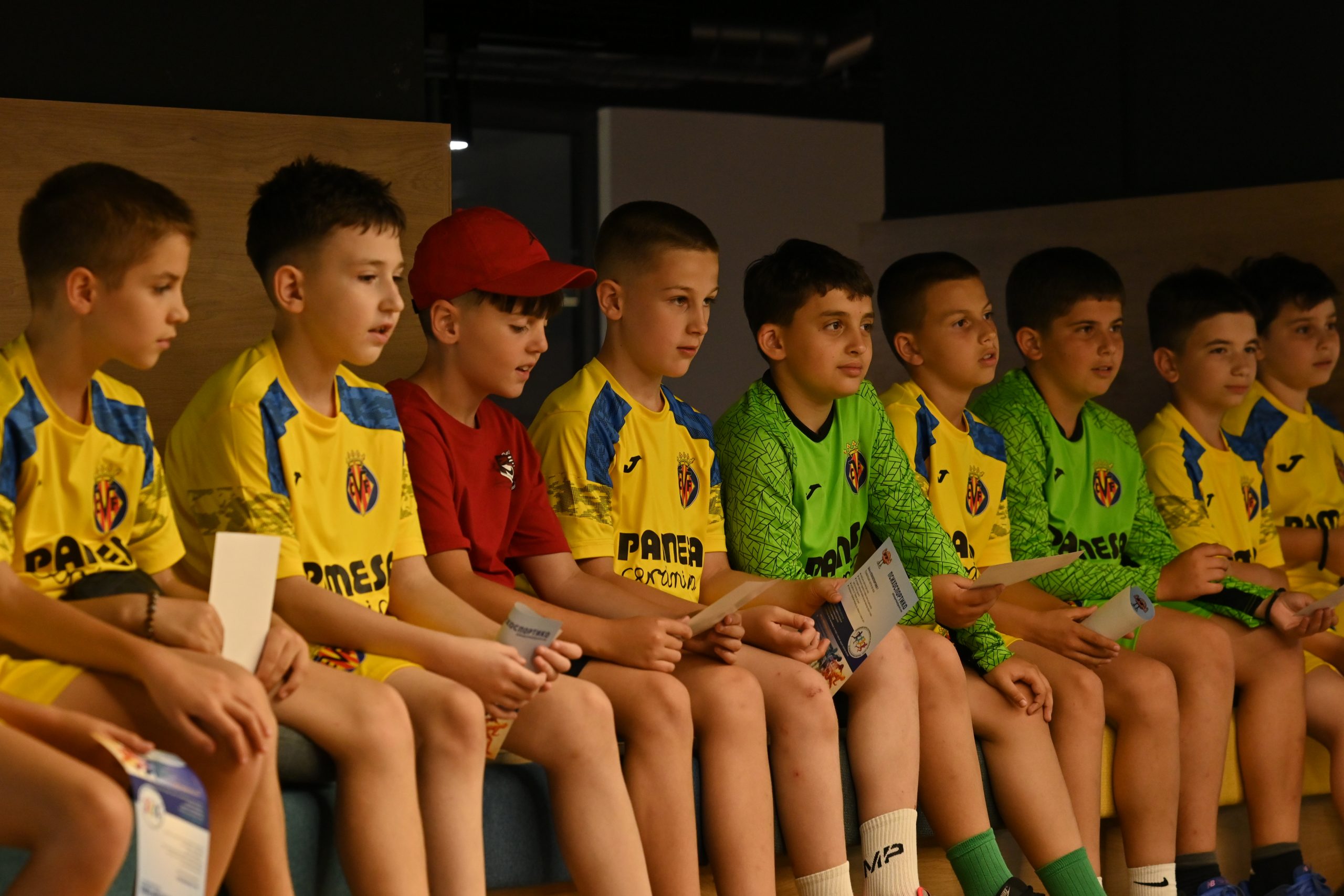
How important is psychological preparation in the development of young football players?
How is self-confidence built? And how can parents and coaches best support children in their sporting growth?
In this new interview, we speak with Iva Zdravkovska, sports psychologist, about mental strength, team connection, and the role of emotional stability in sport.
Because a successful football player is not built through training alone, but also through the right support, understanding, and inner development.

- Why is working with a sports psychologist important for children who train football?
In children, alongside the development of technique and physical fitness, self-confidence, emotional regulation, discipline, and mindset are also developing. Mental skills such as concentration, coping with pressure, and self-belief are not innate — they are learned and trained. The earlier we begin developing them, the stronger and more stable the foundation we build for both their sporting and personal growth.
- What do young athletes most often struggle with – confidence, concentration, or motivation?
I wouldn’t say they “lack” these qualities, but rather that they are still developing. With young football players, self-confidence tends to fluctuate the most. One day they feel unbeatable; the next, after a single mistake, they lose belief in themselves. Concentration can also be a challenge, especially in competitive situations. Motivation is usually present, but it needs to be directed properly — toward learning and improvement, not only toward results.
- Can psychological preparation influence performance on the pitch?
Absolutely. Performance is directly connected to how a player thinks and how they interpret situations on the field. A player who can manage anxiety, stay focused, and recover quickly after a mistake will perform much more consistently. Physical and psychological preparation are equally important.
- How is healthy self-confidence built in a young football player?
Healthy self-confidence is not built on empty praise, but on process. It develops through:
-
realistic and achievable goals
-
focusing on the process rather than only the result
-
learning from mistakes
-
support from coaches and parents
-
guidance from professionals
It is important for a child to understand that their value does not depend on one match or one result.
- What if a child is afraid of making mistakes?
Fear of mistakes usually comes from fear of judgment or disappointment. When a child plays “not to make a mistake,” they do not play freely. In such situations, we work on reframing mistakes as part of learning. The best players are not those who never make mistakes, but those who recover from them the fastest.

- What are the most common mistakes parents make, often unintentionally?
Most commonly, it is an excessive focus on results, comparing their child to others, and having overly high ambitions at an early age. Sometimes pressure is unintentionally created through questions like: “Why didn’t you score?” or “Why didn’t you listen when I was shouting?”
Children need to feel unconditional support, not additional pressure.
- How can parents best support their child?
By being emotionally stable support. Instead of analyzing the game immediately after a match, it is better to ask: “Did you enjoy it?” or “What did you learn today?” A supportive comment such as “You did great!” or “I saw how hard you tried – well done!” makes a big difference. Support means trusting the process, the coach, and the child.
- How important is communication between coach and player?
Communication is key. A coach is not just a coach, they are one of the strongest psychological influences in a young athlete’s development. The way feedback is delivered can either build or damage self-confidence. When communication is clear, honest, respectful, and constructive, the child grows not only as a player but also as a person.
- What does “the team is a family” mean from a psychological perspective?
From a psychological perspective, it means a sense of belonging, safety, and mutual trust. When a child feels accepted within the team, their confidence grows and fear of mistakes decreases. A team is not just a group that trains together — it is an environment where empathy, responsibility, and cooperation are learned.